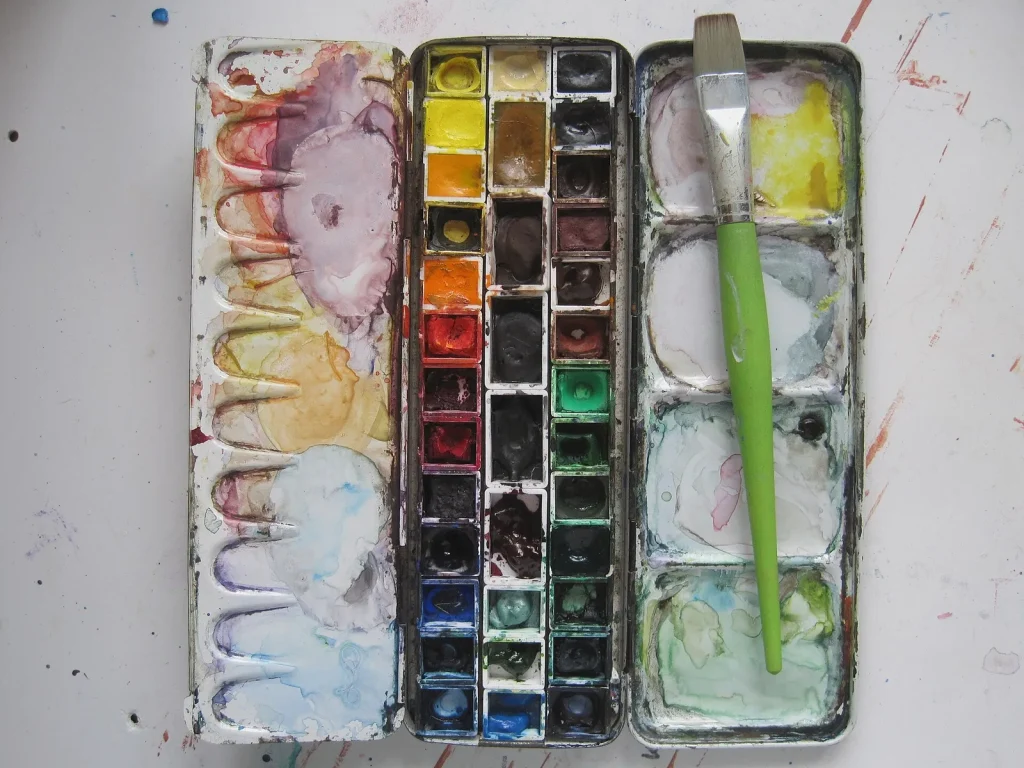
The acrylic vs watercolor question mostly comes down to how you like to work: acrylic is opaque, fast-drying, and permanent once dry, while watercolor is transparent, luminous, and can be reactivated with water. Neither is better. They behave so differently that the right pick depends on the look you want and how much patience you have.
What Each Paint Is Made Of
Both paints use pigment, but the binder differs. Acrylic uses a polymer emulsion that forms a flexible plastic-like film as the water evaporates. Watercolor uses a water-soluble binder, traditionally gum arabic, so the dried paint can be softened and moved again with a wet brush. You can read more in the Wikipedia article on watercolor painting.
That one difference drives almost everything else in the comparison.
Acrylic vs Watercolor: Side by Side
| Feature | Acrylic | Watercolor |
|---|---|---|
| Opacity | Opaque to translucent, depending on how you use it | Mostly transparent |
| Drying | Fast; becomes water-resistant | Fast, but stays re-wettable |
| Fixing mistakes | Paint over them once dry | Hard; lifting is possible but limited |
| Surfaces | Canvas, wood, paper, many others | Mostly watercolor paper |
| Cleanup | Water while wet; hard to remove once dry | Water, any time |
| Finished look | Bold, matte to glossy | Soft, glowing washes |

How They Behave While You Paint
Layering and Light
Here the acrylic vs watercolor gap is widest.
Watercolor works from light to dark. The white of the paper acts as your lightest tone, so you plan around it, painting pale washes first and adding darker layers on top. Acrylic can work either way. Because it covers well, you can paint a dark background and add light shapes over it.
Blending
Watercolor blends beautifully while wet, letting colors bleed into one another. Acrylic blends too, but the clock runs quickly. A slow-drying medium gives more time. If you want to push acrylic color control further, see how to mix acrylic colors cleanly.
Correcting Errors
This is where beginners feel the difference. A misplaced stroke in acrylic can be painted out in minutes. In watercolor, you can blot or lift some paint, but pigment tends to stain the paper, so planning matters more.
Cost, Supplies, and Setup
The acrylic vs watercolor cost question is closer than people expect. Both can be started cheaply. A small watercolor set, two or three brushes, and a pad of watercolor paper are enough. Acrylic needs paint, brushes, and a surface such as canvas panels, plus water jars. Watercolor paper is a specific purchase, since thin printer paper will buckle when wet. Acrylic tolerates a wider range of surfaces, though canvas usually needs to be primed if raw. Our guide to acrylic painting for beginners lists a sensible starter kit.
Which Should You Choose?
After weighing acrylic vs watercolor, choose acrylic if you want bold color, plan to paint on canvas for wall decor, or like being able to cover errors. Choose watercolor if you like soft, atmospheric effects, small portable kits, and sketchbook-style work. Plenty of people end up using both, and you can even combine them: acrylic is fine over dry watercolor, though not the other way around, since watercolor over acrylic tends to bead up.
Steps for Trying Both
- Buy a small student-grade set of each, in the same three or four colors.
- Paint the same simple subject, such as a pear or a strip of hills, in each.
- Note which one you enjoyed, not just which looked better.
- Repeat the test a week later before spending more money.
Subjects That Suit Each Paint
Watercolor shines for loose outdoor scenes, flowers, skies, and travel sketches, where transparency gives a sense of light. Acrylic suits bold abstracts, graphic shapes, portraits built in layers, and anything on a large canvas for display at home. If you are weighing acrylic vs watercolor for wall art, acrylic has the edge: it dries to a durable film, hangs on a stretched canvas without glass, and can be varnished for protection. See our guide on how to varnish an acrylic painting if you go that route.
Watercolor, on the other hand, is usually framed behind glass with a mat, so factor in framing costs when you compare. Travel is easier with watercolor too, since a pan set and a pocket brush fit in a bag, whereas acrylic means tubes, water, and a drying surface.
Safety note: Ventilate your workspace and read pigment labels, since some colors, such as those with cadmium or cobalt, carry warnings. Wash hands after painting and keep supplies away from kids and pets. If you paint over an old surface in a home built before 1978, it may contain lead paint; do not sand it, and follow EPA-recommended lead-safe practices.
Frequently Asked Questions
Is acrylic or watercolor easier for beginners?
Most beginners find acrylic more forgiving because it covers mistakes. Watercolor rewards planning but is very approachable for simple washes.
Can I use acrylic like watercolor?
Yes, by thinning it with water into washes. It will not re-wet once dry, so the effect differs from true watercolor.
Can I use watercolor on canvas?
Not directly. Canvas needs a special watercolor ground, or you should switch to watercolor paper.
Which lasts longer?
Both last well when cared for. Acrylic is more durable physically; watercolors should be framed under glass and kept out of strong light.
Can I mix acrylic and watercolor in one piece?
Yes. Paint watercolor first, let it dry, then add acrylic on top.