Learning how to stretch a canvas means cutting fabric a few inches larger than your frame, pulling it tight over wooden stretcher bars, and fixing it with staples. It is a straightforward job that saves money and lets you choose the exact size and canvas type you want. With a staple gun, a pair of canvas pliers, and about an hour, you can build a drum-tight surface ready for priming.
What You Need to Stretch a Canvas
| Item | Notes |
|---|---|
| Stretcher bars | Four bars that slot together at the corners; sold in pairs by length |
| Raw canvas | Cotton or linen, cut 2 to 3 inches larger than the frame on each side |
| Canvas pliers | Wide jaws for gripping and pulling the fabric |
| Staple gun and staples | Heavy-duty; staples around 1/4 to 3/8 inch |
| Scissors or utility knife | For cutting canvas |
| Tape measure and square | To check corners are true |
| Spray bottle | Optional, for tightening |
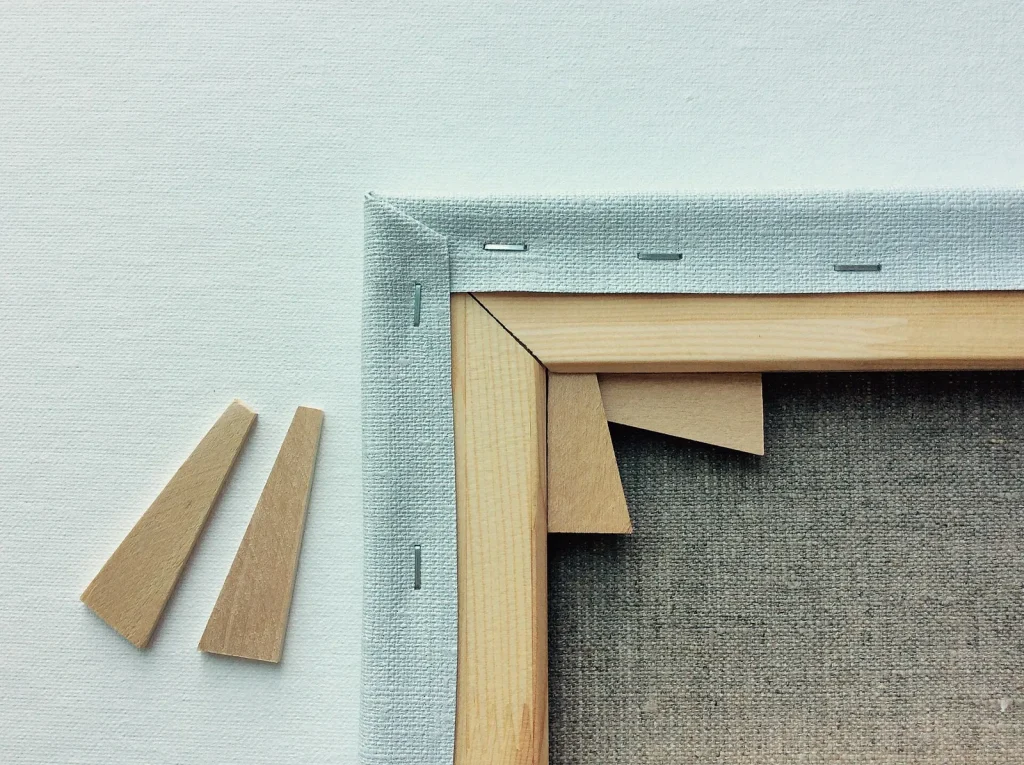
Stretcher bars usually come with small wedges called keys, which fit into slots at the inside corners. They let you tighten the canvas later if it sags. You can see a set in the photo below.
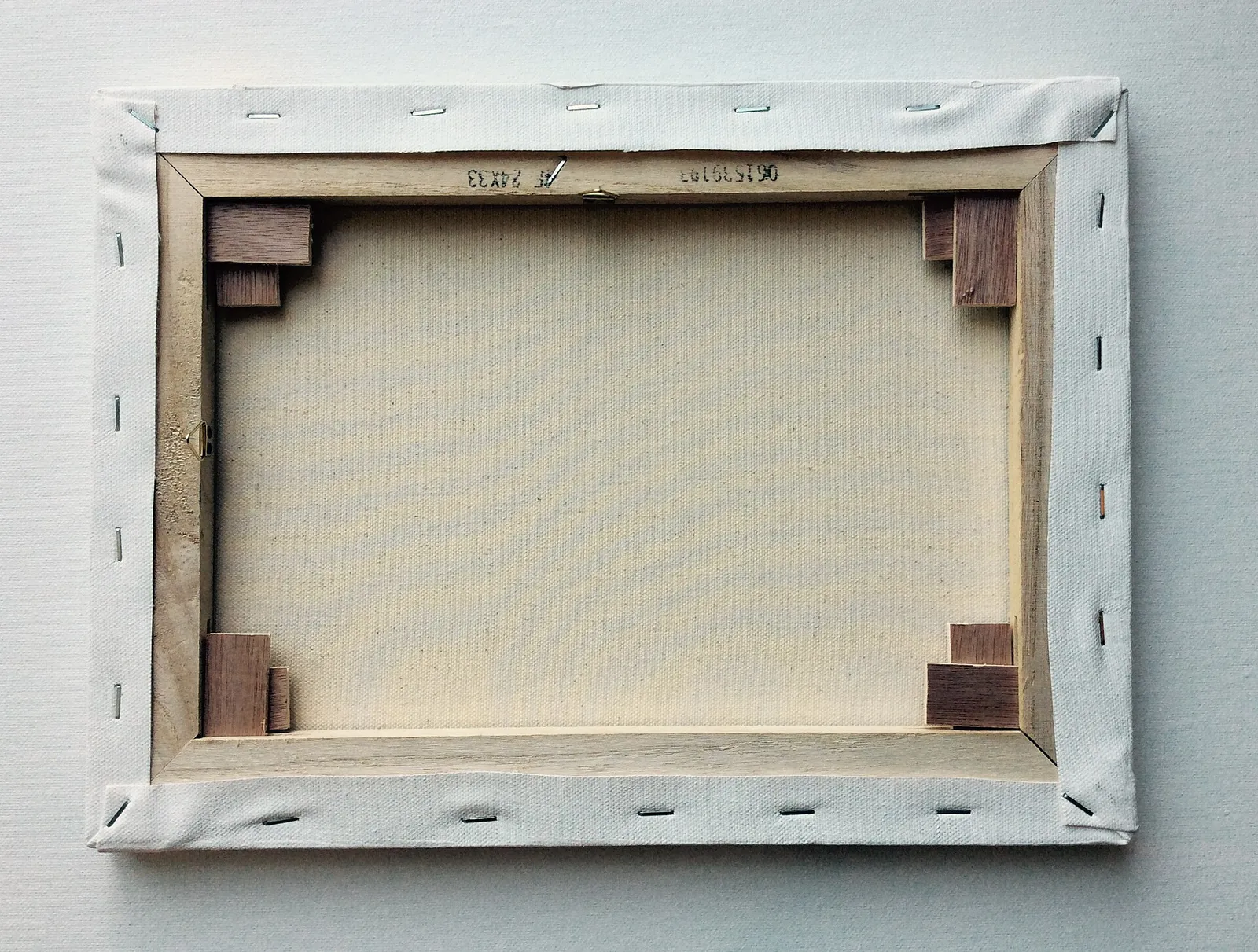
How to Stretch a Canvas Step by Step
- Assemble the frame by sliding the bar ends together at the mitered corners. Check each corner with a square, and keep it flat on a table.
- Lay your canvas face down on a clean surface and place the frame on top, centered. Leave an even margin all around.
- Fold the canvas over the center of one long bar, pull it snug with pliers, and put a staple in the middle of the bar’s back edge.
- Move to the opposite side. Pull firmly and staple in the center there too.
- Repeat on the two short sides. You now have four center staples.
- Work outward from the center on one side, placing staples about 2 inches apart. Stop about 2 to 3 inches before the corners.
- Staple the opposite side the same way, alternating sides so tension stays even.
- Fold the corners, as described below, and staple them down.
- Trim loose fabric if you wish, and tap in the keys lightly if the canvas needs more tension.
Tip: Alternate and Stay Even
The trick to knowing how to stretch a canvas well is to alternate sides rather than finishing one edge completely. Pulling evenly stops wrinkles and keeps the weave straight.
Folding the Corners
No guide on how to stretch a canvas is complete without covering the corners.
Corners are the part most people find fiddly. The common method is the hospital fold, similar to wrapping a gift or making a bed. Pull the fabric at the corner across the frame, fold the overhang into a neat triangle, then fold the remaining flap over the bar and staple. Keep the fold flat so the canvas does not bulge on the front. Some people prefer a simple envelope-style tuck, which is easier but bulkier. Practice on a scrap before you do the real thing.
Fixing a Loose or Sagging Canvas
If the canvas has ripples after stapling, try one of these. First, tap the keys into the corner slots; each tap expands the frame slightly. Second, if it is raw cotton, lightly mist the back with water and let it dry. The fibers shrink slightly as they dry. Do not soak it. Do not try the water trick on primed canvas, because moisture can affect the ground. Once the surface is taut, our guide on how to prime a canvas shows the next step. You will want two or three coats of gesso, and the priming also tightens raw fabric a little.
Why Stretch Your Own Canvas?
Many artists decide to stretch a canvas themselves once they see the savings. In short, how to stretch a canvas is a skill worth learning.
A pre-stretched canvas is convenient, but stretching your own offers more control. You pick the fabric weight, you can make unusual sizes, and a roll of canvas is cheaper per square inch than ready-made ones. It also lets you paint on better-quality linen. Read more about the material itself on the canvas page on Wikipedia. If you plan to use it for a first project, take a look at our easy canvas painting ideas for subjects that suit a new surface.
Staples vs Tacks
Staples are quick and common. Traditional artists sometimes use tacks or lace the canvas, but a stainless or galvanized staple works well and is easy to remove if you restretch. If you may want to unstretch the work later, avoid cutting off all of the overhanging fabric.
Safety note: Staple guns can cause injury, so keep fingers clear of the nose, wear eye protection, and unplug or disengage electric models when loading. Work in a ventilated area if you prime afterward, and if the stretcher bars are reclaimed from an older home built before 1978, treat any old paint as possibly lead-based and follow EPA-recommended lead-safe practices or use a test kit.
Frequently Asked Questions
How much extra canvas do I need?
Allow about 2 to 3 inches on every side beyond the frame so you can grip it with pliers and wrap the edges.
Should I stretch before or after priming?
Usually before. Raw canvas is stretched first, then primed so the gesso tightens the weave.
Do I need canvas pliers?
They help a lot. Hand-pulling works for small canvases, but pliers give a tighter, more even stretch.
What if my stretcher bars are warped?
Use straight bars, since warped ones pull the canvas unevenly. Choose bars that lie flat on a table.
Can I restretch a sagging canvas?
Yes. Tap in the keys, or remove the staples, pull it tighter, and restaple.