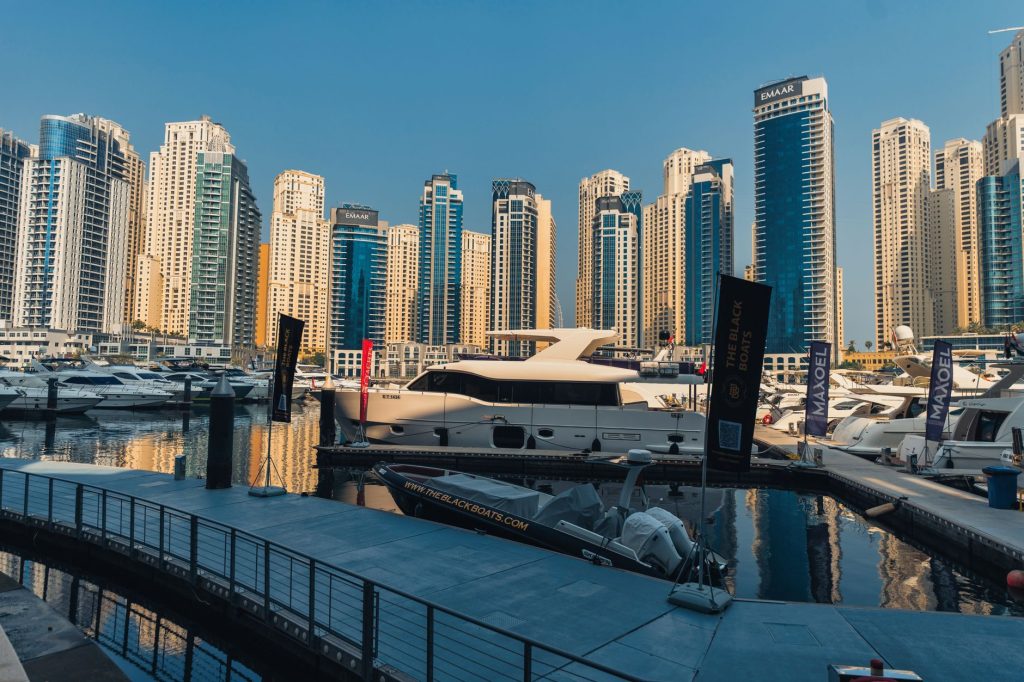
Living in Dubai gets filtered through a very particular social media lens: yachts, supercars, rooftop pools. But the day-to-day reality of the dubai luxury lifestyle involves decisions and trade-offs that nobody posts about. If you’re an expat weighing a move here, it helps to know what things actually cost before you sign anything.
So I’ll break it down the way I’d explain it to a friend, covering housing, food, transport, and the less glamorous stuff that adds up faster than you’d expect.
What Dubai Luxury Actually Costs
Housing is where the numbers get serious first. A luxury apartment in Dubai Marina runs somewhere between AED 180,000 and AED 300,000 a year in rent, depending on the floor, the view, and how recently the building was renovated. Buy on Palm Jumeirah instead, and you’re entering a market that recorded AED 4.2 billion in villa sales in Q1 2024 alone, which tells you something about demand.
Ownership brings its own layer of costs. Burj Khalifa residents pay around AED 35 per square foot in annual service charges, so a decent-sized apartment can mean a six-figure service bill on top of the mortgage. A lot of people I’ve spoken to underestimate this completely. Beyond that, monthly living expenses for a genuine dubai luxury lifestyle tend to fall between USD 8,000 and 15,000, not counting rent. That covers premium groceries, leisure, and the occasional splurge, but it can stretch quickly.
One thing that genuinely changes the math here: no personal income tax. Dubai sits at 22nd on the Mercer 2024 Cost of Living Index, which sounds expensive until you factor in that whatever you earn, you keep. For most expats coming from the UK, Australia, or North America, that shift alone reframes the whole calculation.
Where the Wealthy Live and Dine
Downtown Dubai and Dubai Marina pull in most of the high-net-worth crowd, and it’s easy to see why. Both areas mix walkable waterfront access with easy airport links and a restaurant scene that’s genuinely hard to beat. The city has over 200 Michelin-recognised restaurants as of 2024, and places like Zuma and Nobu do consistent business from both residents and visitors flying in specifically to eat there.
Dinner for two at a Michelin-starred spot will cost you AED 1,000 or more, often before you’ve looked at the wine list. And honestly, for a special occasion, most people find it worth it. Where it bites is when that becomes your regular Tuesday. The dubai luxury lifestyle is easier to sustain when you’re deliberate about which experiences you actually care about versus which ones you’re doing out of habit.
The Real Daily Trade-offs
This is the part that catches people off guard. Transport costs more than newcomers expect. Taxis are convenient but add up daily, and if you want a private driver or a decent lease on a luxury vehicle, you’re looking at another AED 5,000 to 10,000 a month depending on the car. Public transport exists and works reasonably well, but it doesn’t really match the lifestyle most people move here for.
Groceries at premium supermarkets (Waitrose, Spinneys) run noticeably higher than equivalent shops back in Europe. I’d say the premium is real but manageable if you’re strategic. Where I’ve seen people genuinely struggle is when they try to replicate their home-country spending habits in a market priced for luxury consumption. Some months I’m honestly not sure whether the convenience is worth it or whether I’m just paying for the postcode.
Because the dubai luxury lifestyle rewards people who think about it deliberately. Certain things, like a well-located apartment or quality dining a few times a week, are worth every dirham. Others, like daily taxi rides when the Metro is right there, just drain the budget quietly.
Making It Work Long-Term
The expats who seem happiest here after a few years are the ones who set an actual budget rather than assuming the tax savings will cover everything. They treat the big experiences, the weekend in a five-star hotel an hour away, the dinner at a rooftop restaurant, as intentional choices rather than defaults. And they find cheaper versions of everyday things without feeling like they’ve compromised anything meaningful.
Dubai rewards that kind of thinking. The infrastructure is there, the quality of life is genuinely high, and the lack of income tax means your savings can compound in a way that’s hard to replicate elsewhere. But it takes a bit of honest accounting to get there, especially in the first year.
FAQs
Is Dubai luxury lifestyle affordable for expats?
It can be, especially with no personal income tax, but costs vary a lot depending on the neighbourhood you choose and how you spend day-to-day.
What areas in Dubai are considered most luxurious?
Dubai Marina, Downtown Dubai, and Palm Jumeirah are the main ones, each known for high-end properties and premium amenities.
Do you pay tax on income earned in Dubai?
No personal income tax applies, which is a significant financial advantage for most expats relocating from higher-tax countries.