How to mix acrylic colors without making mud starts with one rule: use as few pigments as possible, and add the darker color to the lighter one in tiny amounts. Mud, that flat brownish-gray, appears when you stir together too many colors, especially opposites on the color wheel in equal parts. A small palette and a clean brush will solve most of it.
Start With a Limited Palette
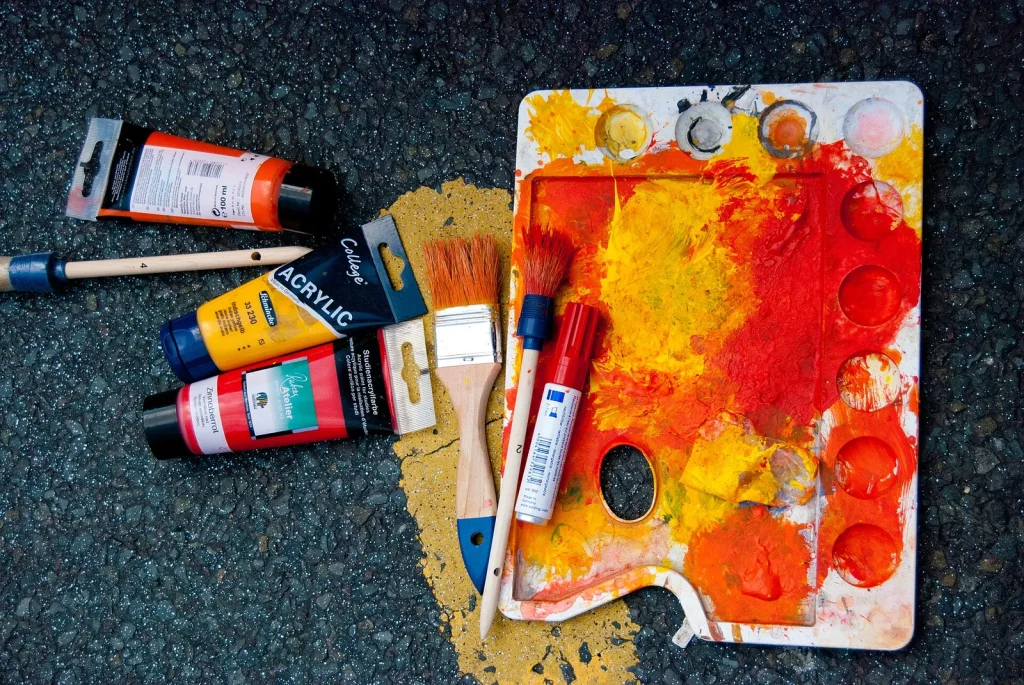
A limited set of paints makes mixing predictable. A common beginner setup is a warm and a cool version of each primary, plus white. For example, a cool and a warm red, a cool and a warm yellow, and a cool and a warm blue. That is six colors plus white, and you can mix a wide range from them. Our acrylic painting for beginners guide suggests the same kit.
Why warm and cool versions? A cool blue leaning toward green mixes into clean greens, while a warm blue leaning toward violet gives cleaner purples. A single blue cannot do both well.
The Color Wheel in Plain Terms
Primary colors (red, yellow, blue) combine to make secondaries: orange, green, and violet. Colors opposite each other on the wheel are complements, such as red and green or blue and orange. Mixed in small amounts they tone each other down; mixed in equal parts they turn gray or brown. For a deeper look, see the Wikipedia page on the color wheel, and our color wheel guide for home decor applies the same ideas to rooms.
How to Mix Acrylic Colors Step by Step
- Squeeze small amounts of each color onto your palette, leaving space between them.
- Take a palette knife or clean brush and pull a little of your first color into an empty area.
- Add the second color a tiny bit at a time. Dark pigments are strong, so start with less than you think.
- Mix thoroughly until there are no streaks, then test a dab on scrap paper or the edge of your canvas.
- Adjust: add white to lighten, a touch of the opposite color to tone down, or more of one parent to shift the hue.
- Make more than you need. Matching a mix a second time is much harder than making extra.
Tip: Wipe Your Tools
Anyone learning how to mix acrylic colors should remember this habit.
Wipe the knife or brush on a paper towel between colors. Carryover from a previous mix is a hidden cause of dull results.
Mixing Common Colors
Here is a quick cheat sheet for how to mix acrylic colors you will use most.
| Goal | Try mixing |
|---|---|
| Orange | Yellow plus a little red |
| Green | Yellow plus a little blue |
| Violet | Blue plus a little red |
| Soft gray | Blue plus orange, with white |
| Warm brown | Red plus green, or all three primaries |
| Pastel | Any color plus a lot of white |
Ratios depend on your specific paints, so treat these as starting points and adjust by eye.
Why Mixes Turn Muddy and How to Fix Them
Muddy colors usually come from three causes: mixing too many pigments, mixing complements in equal amounts, or overworking paint that has already started to dry. If a mix goes dull, you can rescue it by adding a clean, strong primary, or by starting over with a fresh dab. Do not keep stirring in more colors; that makes it worse. Another trick is to mix on the canvas instead, laying one color next to another and blending lightly so some of each stays visible. Knowing how to mix acrylic colors well also means knowing when to stop mixing.
Value and Temperature
A color that feels wrong is often a value problem, meaning too light or too dark, rather than a hue problem. Squint at your painting. If a shape disappears against its neighbor, adjust the lightness before changing the color.
Practice Exercises That Build Skill
Try a mixing chart. Draw a grid on a sheet of paper or primed board, then paint a row for each pair of colors, blending from pure A on the left to pure B on the right in five steps. Add a column where each step includes a bit of white. Label the swatches and keep the chart near your easel. After an hour you will have a personal reference showing exactly how your paints behave, which beats any printed guide. Learning how to mix acrylic colors from your own chart builds confidence quickly, and you can repeat the exercise whenever you buy a new tube.
Safety note: Work in a ventilated space and avoid breathing sanding dust from dried paint. Check labels for pigments like cadmium or cobalt, and do not put brushes in your mouth. If you are painting over an old piece from a home built before 1978, it may have lead paint; use EPA-recommended lead-safe practices or a test kit rather than sanding.
Frequently Asked Questions
What colors make brown in acrylic?
Mix a primary with its complement, for example red with green, or blend all three primaries. Adjust with white or extra yellow for lighter tones.
How do I make a color darker without black?
Add a bit of its complement or a dark blue. This often gives richer darks than black, which can look flat.
Why does my paint look different after it dries?
Many acrylics dry slightly darker. Test your mix on scrap and let it dry before committing.
Do I need to buy lots of colors?
No. Six colors plus white is enough to mix most of what you will need.
Can I mix acrylic with water?
Yes, in small amounts. Too much water can weaken the paint film, so use a medium if you want a thinner, more fluid mix.