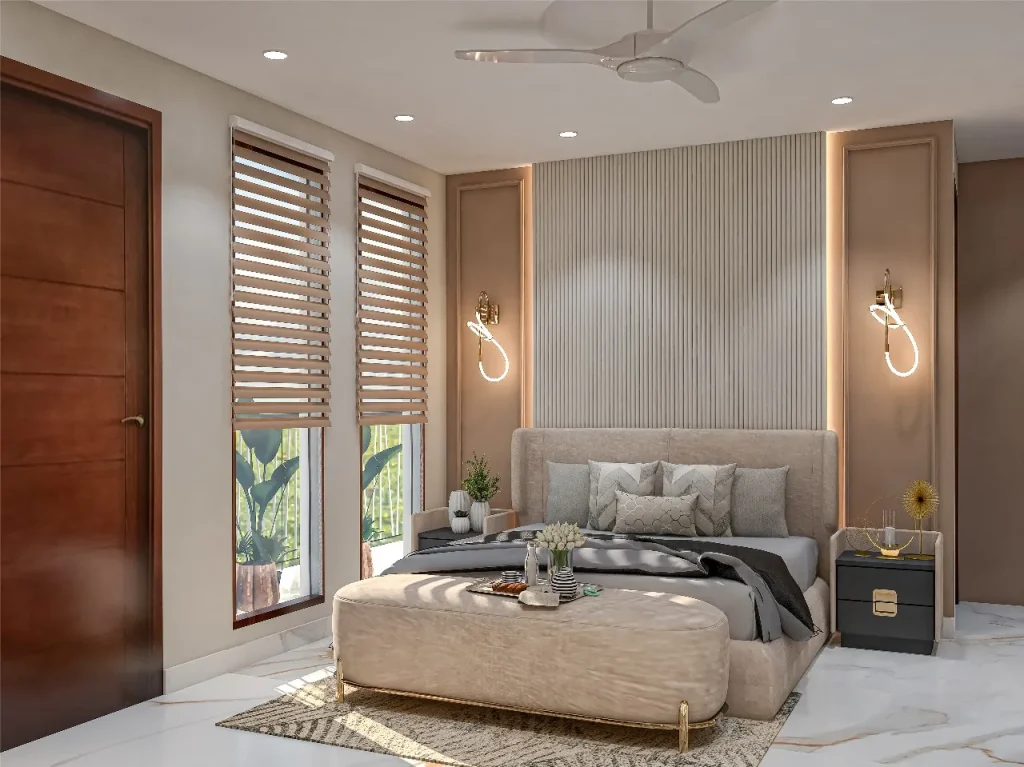
Calming bedroom paint colors are soft, muted shades with gentle undertones, such as pale sage, misty blue, warm greige, soft lavender-gray and creamy white. They keep contrast low, so nothing on the walls demands attention when you are trying to wind down. How the color looks in your own light matters as much as the name on the can.
What Makes a Bedroom Color Calming
Two features do most of the work: low saturation and moderate brightness. A muted blue-gray feels quiet, while a bright cobalt feels energetic. Likewise, a very dark wall can feel cozy but also heavy in a room with little daylight. Aim for colors that look slightly grayed or earthy and avoid anything that looks neon or sugary.
The temperature of the color affects the mood too. For a closer look at that, read about warm vs cool paint colors.
Calming Bedroom Paint Colors to Try
Soft sage green
A gray-green reminds many people of plants and fresh air. It pairs well with white bedding and natural wood.
Dusty blue and blue-gray
Blue is the classic choice for sleep spaces. Choose a version with a little gray so it does not feel icy.
Warm greige and soft taupe
Neutral and snug, these shades work with nearly any bedding. If you like this direction, see our list of warm neutral paint colors.
Pale lavender-gray
A gentle purple with plenty of gray looks calm and a bit unexpected. Test it carefully since it can shift pinker or bluer through the day.
Creamy white
A warm white is the quietest option and a good canvas for textiles and art.

Using Calming Bedroom Paint Colors Well
| Element | Suggestion |
|---|---|
| Walls | Muted, low-contrast shade in matte or eggshell |
| Ceiling | Soft white or a lighter tint of the wall |
| Trim | Warm white, slightly lighter than walls |
| Bedding | Layered neutrals plus one muted accent |
| Lighting | Warm bulbs and dimmers |
Steps to Choose Your Bedroom Color
- Notice how your room looks at night, since most bedroom time is in artificial light.
- Pick three muted candidates and paint large patches on two walls.
- Look at them in the morning, evening and with your bedside lamps on. Our guide to how to test paint samples has more tips.
- Choose the one that still feels quiet at night.
- Pick a matte or eggshell finish, which softens glare and hides wall flaws.
Adding Depth Without Losing the Calm
If you want something more than a flat wall, try a soft focal point behind the bed. A painted headboard shape is an easy option; see our painted headboard wall DIY guide. Keep it in the same color family, a shade or two deeper than the walls, so the effect stays peaceful.
Light, Texture and Color Working Together
Even the best calming bedroom paint colors can fall flat under harsh lighting. Choose warm-white bulbs for bedside lamps, add dimmers if possible and hang curtains that soften daylight. Texture adds quiet interest too: linen bedding, a wool throw and a woven rug all keep a restrained palette from looking bare.
Small bedrooms
In a compact room, stay with light shades for a roomy feel. Our list of {L((“paint-colors-for-small-rooms”,”paint colors for small rooms”))} offers more ideas.
Rooms with little sun
Choose a warmer neutral or a green with a bit of yellow in it, since cool shades can turn gray and dull in dim light. Always test the paint on the wall before committing.
Whichever shade you choose, give it a few days on the wall before judging it, since your eye needs time to adjust and the color shifts across the day. That patience is the simplest way to be sure the room feels restful for years.
Safety Note
Bedrooms are best painted with low-VOC products and with the windows open. Let the room air out for a day or more before sleeping in it, following the label.
If your home was built before 1978, the existing paint may contain lead. Use an EPA-recommended lead test kit before sanding or scraping, and follow lead-safe work practices if the result is positive (see the EPA renovation and painting guidance).
Frequently Asked Questions
What color is best for sleeping?
Soft blues, greens and warm neutrals are common picks. The best one is whichever feels quiet to you in the room’s real light.
Are dark calming bedroom paint colors possible?
Yes. Deep blue-green or charcoal can feel cocooning. Use warm lamps and keep other surfaces light so the room does not feel heavy.
Which sheen is best for bedroom walls?
Matte or eggshell. They reduce glare and are gentle on imperfect walls.
Should the ceiling be white?
A soft white is a safe pick. You can also use a lighter tint of the wall color for a seamless look.
Do colors really affect sleep?
Color affects mood and comfort, but sleep depends on many factors, and no paint is a cure. For more on how hues work, see Wikipedia’s color theory article.