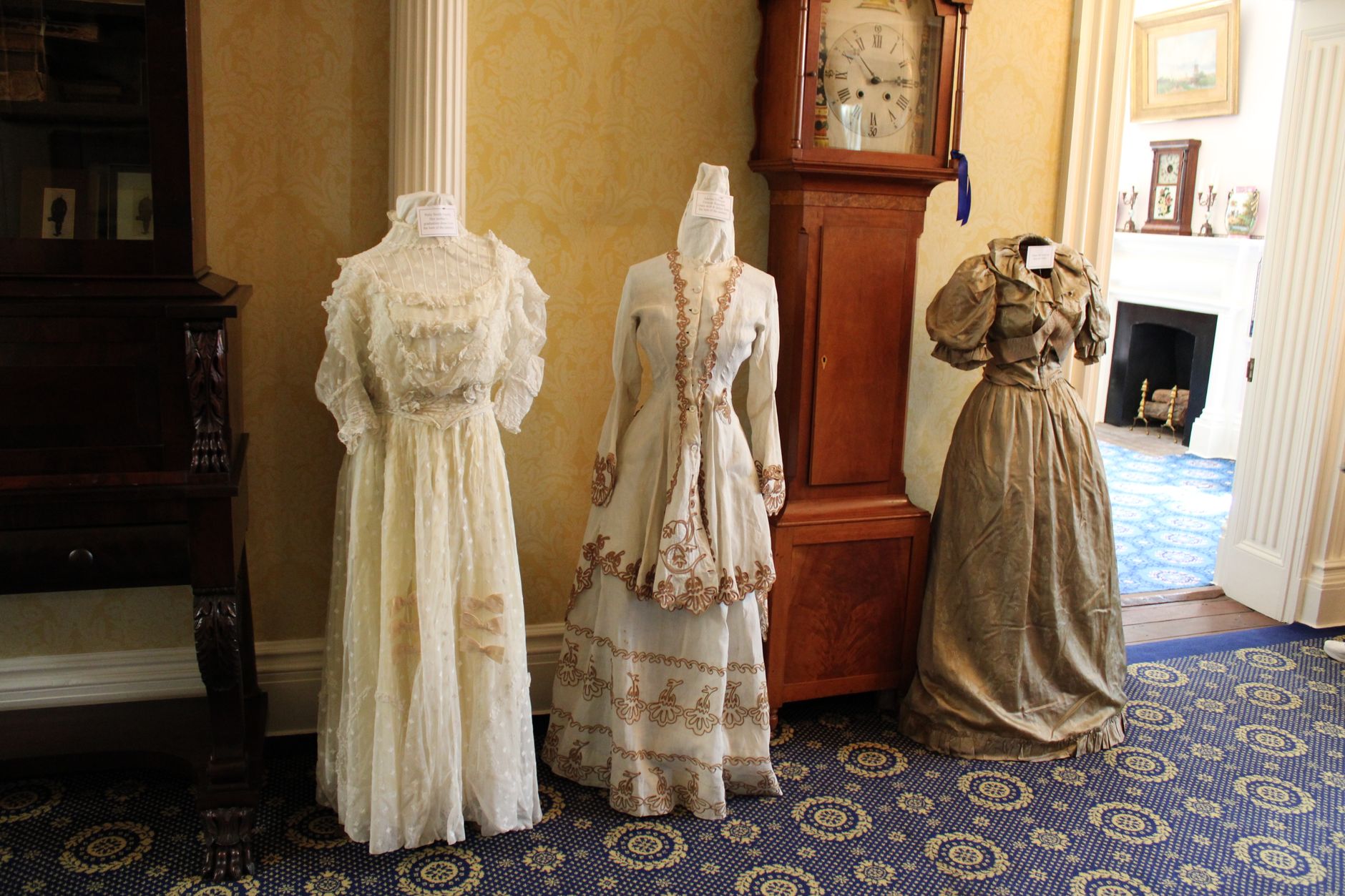
Georgian era fashion is like a political statement you could wear. Spanning from 1714 to 1830 during the reigns of four King Georges, it evolved from extravagant court displays to minimalist neoclassical styles. Each major change often coincided with wars, revolutions, or power struggles. That’s what makes the fashion so fascinating, beyond just pretty portraits in museums.
Many costume histories treat this period as one continuous aesthetic journey, which misses how tumultuous the changes really were. The silhouettes of 1740 and 1800 look barely related, reflecting not just shifts in taste but the social dynamics at play. It was about who was thriving, who was fearful, and what messages they wanted to send.
Defining Georgian Era Fashion
The pannier is perhaps the most iconic image of early Georgian fashion. This side hoop structure pushed women’s skirts out wide rather than front-to-back. By the 1740s, some court gowns were nearly six feet across at the hips. That kind of width wasn’t just for show; it signaled wealth. The wearer needed enough silk to fill the space, a home with wide doors, and an environment grand enough to accommodate such excess. Smaller spaces meant lower status.
Men were getting in on the action too. The macaroni subculture of the 1760s and 1770s brought some of the most theatrical fashion of the time. Young men returning from tours in Italy sported towering powdered wigs, tiny hats, and tight breeches, embodying an almost ostentatious love for continental fashion. The term “macaroni” in the American song “Yankee Doodle” pokes fun at this group, which was viewed as effeminate and un-British by many.
Throughout much of this era, women wore stays instead of corsets. It’s an important distinction. Stays were fortified with whalebone or cane and designed to support the body from outside rather than compress it. Typically worn over a shift, they distributed weight without the extreme pressure of the corsets that came later. Using “corsets” as a shorthand for Georgian stays really oversimplifies the differences in design and purpose.
Politics and Silhouette Changes
The French Revolution in 1789 pretty much overnight ended the wide pannier silhouette for those in the know. Wearing heavy, brocaded silk suddenly seemed like a nod to the same kind of aristocratic excess that was leading to the guillotine. Within about a decade, ladies shifted to thin white muslin gowns, cut high under the bust in a neoclassical style. This swift change wasn’t just about fashion; it felt like a political statement as well.
Muslin held significant symbolic weight. It was light, draped beautifully, and reminiscent of ancient Greek and Roman sculptures, implying republican virtue rather than monarchical excess. Sure, it was cold in British winters, so many women added wool shawls or spencer jackets, but the new silhouette was more about the message than comfort.
On the men’s side, Beau Brummell changed the whole game around 1800. Rather than flamboyance, he championed a look focused on perfectly fitted dark wool broadcloth, immaculate linen, and simplicity. He reportedly spent hours perfecting his cravat knot and discarded any that didn’t meet his standards before heading out. This refined style sent a message of control and precision, contrasting sharply with material excess. Notably, wool broadcloth became the prestigious fabric for gentlemen across Europe, influencing the economy directly.
Key Fabrics and Accessories
Silk brocade and damask were prominent in early Georgian court dress. These fabrics were primarily imported or woven by Spitalfields weavers in London, who lobbied Parliament to protect their trade from French competition. Those battles shaped actual legislation, illustrating how intertwined fashion and trade policy can be, almost like today.
Wool broadcloth was the backbone of Britain’s textile economy during this period. It was used in men’s coats, women’s riding habits, military uniforms, and even everyday wear for the middle class. Quality varied widely by region and price, from rough country cloth to the fine West of England broadcloth favored by Brummell, which in the early 1800s could run several shillings a yard.
In a time when sumptuary laws had faded, accessories played a big role in signaling status. Shoe buckles were so important that their decline in the 1790s, replaced by simple ties, caused real distress for buckle-makers in Birmingham. They even petitioned the Prince of Wales, who wore buckles for a time in solidarity, but that didn’t last.
What We Can Learn Today
Georgian era fashion is worth studying because it’s anything but static. Each decade pushes back against the one before it, often for reasons that aren’t simply aesthetic. The move from panniers to neoclassical muslin, and the shift from excess to Brummellian restraint, reflect real political and economic changes. To me, this makes it more honest than viewing any fashion period as mere creative expression. Clothing has always carried messages, and the Georgians made that especially clear. If you’re digging into this era, exploring trade debates around fabric alongside the portraits can radically change your understanding of both.
FAQs
What did women wear in the Georgian era?
Women typically wore structured gowns over wide pannier hoops with stays underneath. After the 1790s, neoclassical high-waisted muslin dresses became fashionable, replacing heavier silk and brocade garments from earlier decades.
What is the difference between Georgian and Regency fashion?
Regency fashion (about 1811–1820) falls within the Georgian era. It specifically denotes the neoclassical high-waisted silhouette, while “Georgian” spans a wider 116-year period with varied styles.
Did men wear corsets in the Georgian era?
Some men wore light boned stays, especially in the early and mid-Georgian period, to achieve a smooth chest and slim waist under their coats. While less common than women’s stays, it wasn’t rare.
Leave a Reply