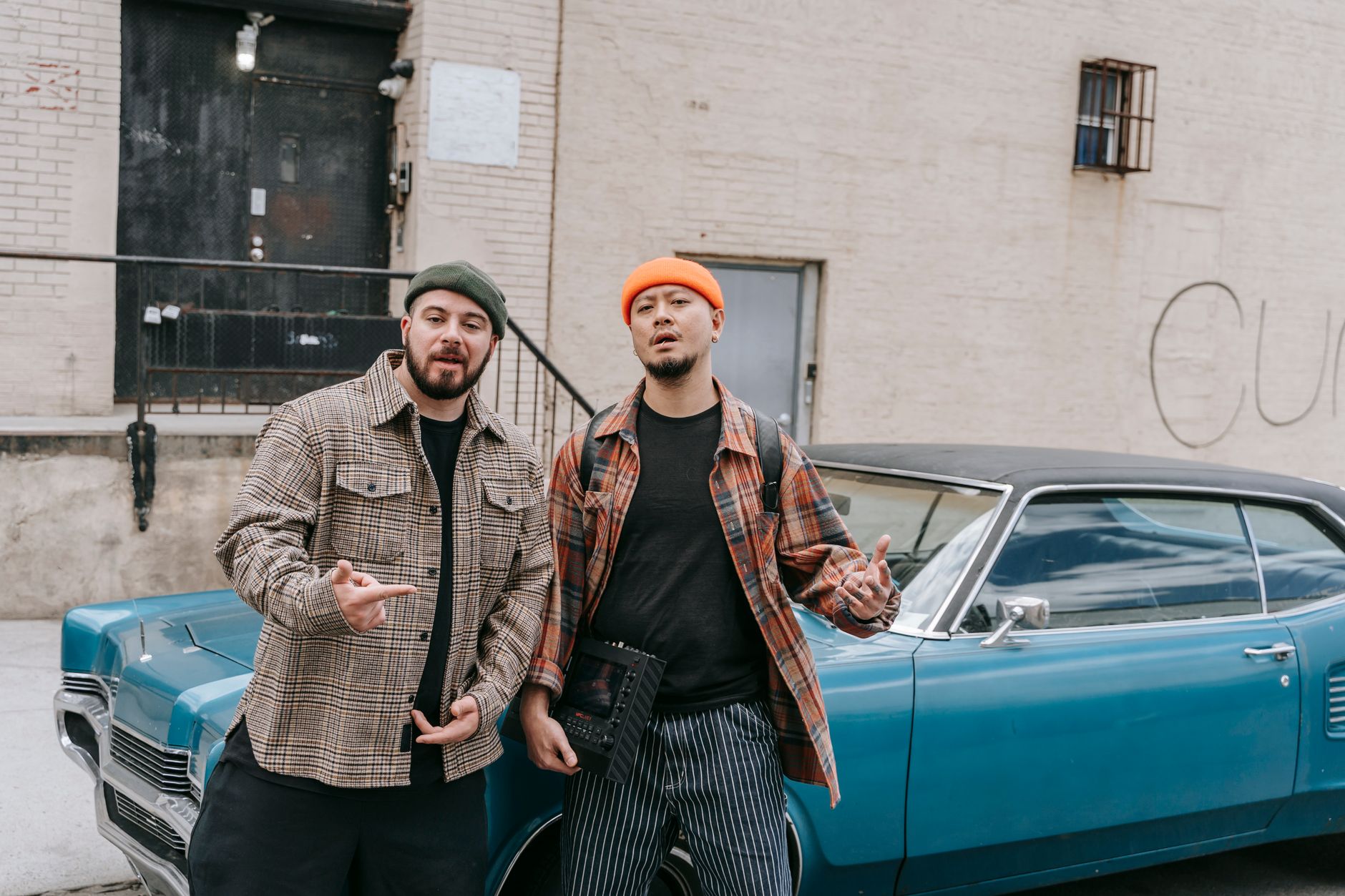
1990s mens fashion introduced the baggy jean, and surprisingly, a pair of wide-leg denim that would fit right in at a 1995 high school hallway now retails for about $120 at mainstream stores. This isn’t just nostalgia pricing. It’s a reflection of demand. It’s odd how few expected this revival to last, but three or four years on, those baggy silhouettes are still going strong.
Let’s use a familiar example: Will Smith’s outfit from the early seasons of The Fresh Prince of Bel-Air. Think bright oversized shirts, high-top sneakers, and loose trousers. Back then, it felt unique to him, almost cartoonish. Now, it closely mirrors what you’d see on a streetwear-savvy guy in 2024. This isn’t by chance, and it’s worth exploring why.
1990s Style Trends
The decade featured two contrasting styles that somehow coexisted. On one hand, there was grunge: open flannel shirts over band tees, straight-leg or baggy jeans, and worn-out canvas sneakers. On the other hand, hip-hop led the charge with huge logos and even larger fits. Both styles aggressively rejected the fitted silhouettes of the late 1980s.
The baggy jeans were the common thread. Brands produced high-rise jeans that sat at the navel, with leg openings reaching 20 inches or more. Flannel shirts often came from workwear labels rather than fashion houses, and both styles adopted them. Meanwhile, chunky sneakers like the Nike Air Max 95 evolved from the gym to everyday wear.
Notable Brands and Designers
Tommy Hilfiger and Calvin Klein defined 90s logos in their own ways. Hilfiger plastered his name across chest panels and waistbands in red, white, and blue, even getting rap artists to wear his gear through generous giveaways. Calvin Klein went minimalist: clean lines and fierce simplicity. A Calvin Klein tee from 1994 looks almost indistinguishable from what the brand offers today.
JNCO created jeans so wide that they became a cultural symbol by themselves. Polo Ralph Lauren found middle ground, where sporting a full Polo fit was a statement. Carhartt, usually a workwear brand, gained traction among skaters and grunge kids for its durability and rugged aesthetic. Most of these labels have either fully returned or are still trading on their original vibes.
Celebrities Shaping Style
Kurt Cobain made flannel shirts and comfy cardigans a purposeful fashion choice. He even wore a $20 thrift store cardigan during Nirvana’s MTV Unplugged performance, with a version of that same piece fetching $334,000 at auction in 2023. It might be an extreme case, but it shows how heavily a celebrity can influence style across generations.
Returning to Will Smith, he proved that bold colors and volume could coexist. His outfits were loud, yet always harmonized in proportion. Then there’s TLC’s Left Eye, who styled the men around her, leading male fans to adopt oversized denim and sports jerseys. Tupac’s signature look of a do-rag, Hennessy tee, and baggy Levi’s became so iconic that it’s essentially a Halloween costume now, well, mostly a Halloween costume.
The 90s Fashion Revival
The revival kicked off subtly around 2018, with wide-leg trousers showing up in high-street stores. By 2021, it was undeniable. Slim jeans, which had dominated for about 15 years, began losing ground to straight and baggy cuts. Chunky sneakers made a strong comeback, with brands like New Balance, which weren’t seen as stylish in 2010, becoming must-haves.
Gen Z played a huge role, especially with their thrifting habits. Platforms like Depop made 90s pieces easily accessible and relatively cheap, spreading the aesthetic well before brands fully caught up. By the time Levi’s reissued their 550 Relaxed Fit and Nike brought back the Air Max 97 in original colorways, the audience was already primed and ready. The time from underground find to mass retail reissue took about three years, which feels average based on what I’ve seen.
Impact on Modern Fashion
1990s mens fashion didn’t just resurface as a trend. It reshaped the baseline silhouette. The slim fit that ruled from around 2008 to 2018 now feels outdated, while the baggy fit hasn’t. It’s a significant turn from what most fashion writers expected just five years ago. Overall, streetwear now thrives on 90s foundations: oversized tees, chunky sneakers, and logo-driven outerwear.
What’s fascinating is how the grunge and hip-hop styles, which seemed opposed in the 90s, have fused into today’s streetwear. You’ll find flannel layered over a sports jersey and it barely raises an eyebrow. The decade provided a flexible fashion vocabulary that we underestimated at the time.
FAQs
What were the key styles in 1990s men’s fashion?
Baggy jeans, flannel shirts, chunky sneakers, and logo-heavy sportswear from brands like Tommy Hilfiger and Calvin Klein defined the decade.
How did celebrities influence men’s fashion in the 90s?
Celebrities like Kurt Cobain and Will Smith made specific garments and looks culturally significant, leading to trends widely adopted within months.
Why is 1990s fashion becoming popular again?
Gen Z’s thrifting culture brought authentic 90s pieces to the forefront, and mainstream retailers followed by reissuing these styles, making them widely accessible and desirable by the early 2020s.
Leave a Reply