The best accent wall ideas start with one simple rule: pick a single wall that already draws the eye, such as the one behind a bed or sofa, and give it a deeper, bolder or patterned treatment than the rest of the room. Done well, an accent wall adds focus and personality with a quart or two of paint and an afternoon of work.
Choosing the Right Wall
Not every wall deserves the spotlight. The best candidate is a solid wall without many doors or windows, usually the one you see first when you walk in. In a bedroom, that is the wall behind the headboard. In a living room, it is often the wall behind the sofa or fireplace. Avoid walls with lots of switches, vents or odd angles, because they interrupt the effect.
Keep the other walls calm. A neutral such as one of our warm neutral paint colors makes a strong contrast and keeps the room from feeling busy.
Accent Wall Ideas Worth Trying
A deeper shade of your main color
This is the safest approach. If the walls are soft greige, make the accent wall a deeper taupe. It adds depth without a jarring change.
A bold complementary color
Navy against warm cream or terracotta against sage gives energy. Use our color wheel guide to find pairings that work.
A dark, moody wall
Charcoal, deep green or ink blue behind a bed makes a dramatic backdrop. Keep the other walls light so the room does not feel heavy.
Geometric patterns and stripes
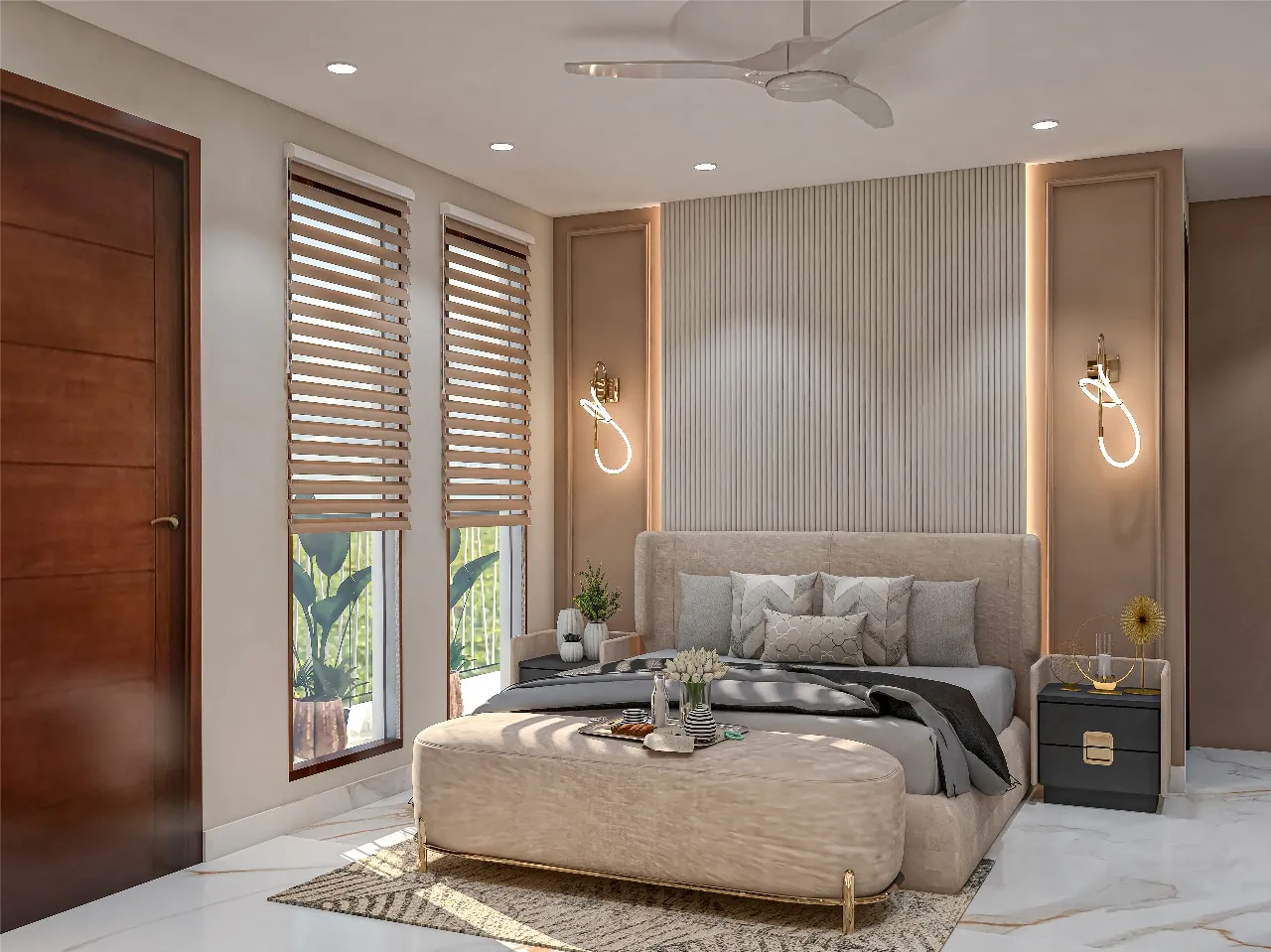
Painted stripes, color blocks and triangles add graphic interest, as in the bedroom shown in this post. They require careful taping; see our DIY geometric wall mural guide for a full walkthrough.
Arches, ombre and headboard shapes
Shape-based ideas such as a painted arch or a faux headboard add architecture to a plain wall. Look at our painted arch wall DIY for the technique.

Accent Wall Ideas by Room
| Room | Wall to choose | Idea |
|---|---|---|
| Bedroom | Behind the bed | Deep blue-green or painted headboard shape |
| Living room | Behind the sofa or fireplace | Rich neutral or dark tone |
| Dining room | Longest wall | Terracotta or deep green |
| Home office | Wall behind the desk | Muted navy or sage |
| Entryway | Wall facing the door | Bright statement color |
How to Paint an Accent Wall
- Decide where the color should stop. Inside corners are the cleanest break, because paint ends neatly where two walls meet.
- Clean the wall, patch holes and lightly sand. Protect the floor and furniture.
- Tape the edges where the accent wall meets the ceiling, trim and the neighboring wall. Press the tape firmly.
- Cut in along the edges with a brush, then roll the field. Dark colors often need two coats.
- Remove the tape while the paint is slightly wet or after a gentle score along the edge, pulling at an angle.
The label on the can lists coverage, and a gallon typically covers about 350 to 400 square feet, so one quart is usually plenty for a single wall. If you are unsure, our how much paint do I need article helps with the math.
Mistakes to Avoid With Accent Wall Ideas
Do not choose a color that clashes with the rest of the room. Test a large sample first. Also avoid making the accent wall in a room with no focal point, since it can look random. When choosing from accent wall ideas, think about what you want the eye to land on, then match the color to your furniture and lighting.
Choosing Colors That Work Together
If you are unsure about a bold choice, stay in the same color family and go two or three shades deeper than the walls. That approach nearly always looks intentional. For a livelier room, pick a contrasting color and repeat it in small accents such as pillows or art so the wall feels connected. Whatever you choose, test it first; our guide to how to {L((“how-to-test-paint-samples”,”test paint samples”))} explains how.
Safety Note
Ventilate while painting and while the paint dries. Use a stable stepladder for the top edge, and wear a mask when sanding.
If your home was built before 1978, the existing paint may contain lead. Use an EPA-recommended lead test kit before sanding or scraping, and follow lead-safe work practices if the result is positive (see the EPA renovation and painting guidance).
Frequently Asked Questions
Are accent walls still a good idea?
Yes, when they are deliberate. A well-chosen wall adds focus and depth. Pick a color that relates to the rest of the room rather than a random bright shade.
Which wall should be the accent wall?
Choose the wall you see first or the one behind your main piece of furniture. Avoid walls cluttered with doors and windows.
What colors go with a dark accent wall?
Soft whites, warm neutrals and light grays work well on the remaining walls because they let the dark wall stand out.
Do I need primer for a dark accent wall?
Often a tinted primer helps dark shades cover in fewer coats. Check the paint can for advice on your product.
Can I use wallpaper instead of paint?
Yes, but paint is easier to change later. If you want the look of a pattern, you can paint stripes or shapes. For more on color combinations, see Wikipedia’s color theory article.