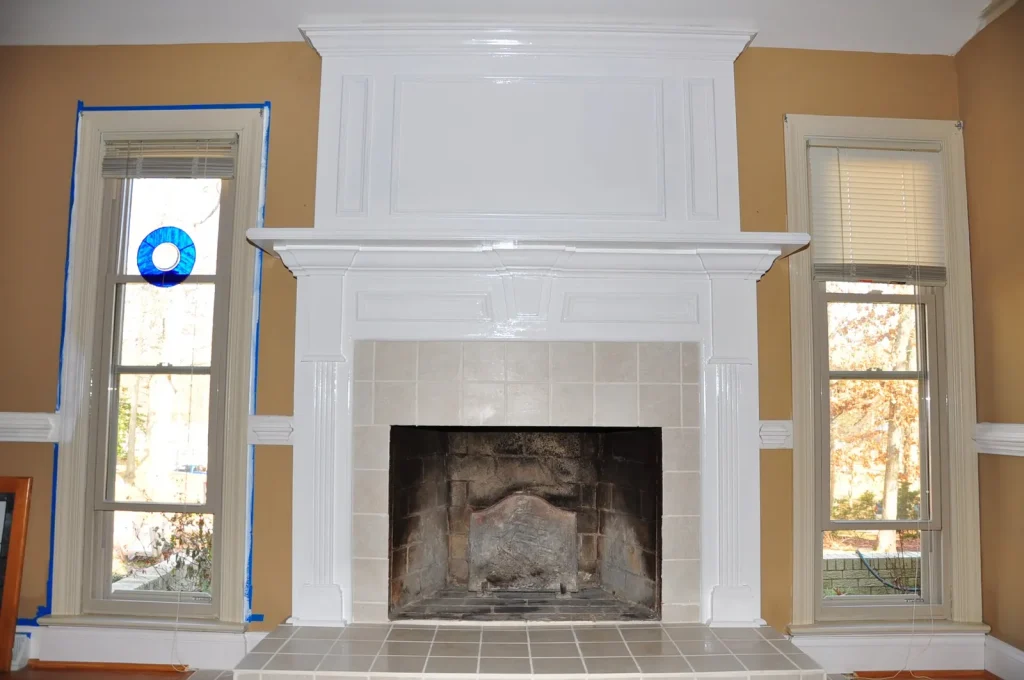
You can paint a brick fireplace in a weekend if you clean the soot off first, prime the porous brick and roll on two thin coats of heat-rated paint. Brick is thirsty and rough, so it takes more paint and more patience than a flat wall, but the change in the room is dramatic. Here is the whole process.
Decide Whether Painting Is Right
Painting brick is hard to undo, because the paint soaks into the pores. If the brick is original to an older home and in good condition, consider alternatives such as a limewash or a stain. If the fireplace is dated, ugly or stained, paint is an easy fix.
Check how the fireplace is used. Wood-burning fireplaces have a firebox that gets very hot. Do not paint inside the firebox, and for the surround, choose a paint labeled for high heat if it sits near the opening. Ask a local pro if you are unsure about clearances.
Materials You Will Need
| Item | Purpose |
|---|---|
| Stiff nylon brush and bucket | Scrub soot and dust |
| Degreasing cleaner or TSP substitute | Cut grime and smoke film |
| Masonry or stain-blocking primer | Seals pores, blocks stains |
| Interior paint, heat-rated where needed | Finish coat |
| Thick-nap roller (3/4 inch) and stippling brush | Gets paint into the mortar joints |
| Painter’s tape, drop cloths | Protection |
How to Paint a Brick Fireplace Step by Step
- Protect the room. Cover the floor and hearth with drop cloths and tape off the mantel, walls and firebox opening.
- Clean the brick. Vacuum loose dust, then scrub with a degreaser and rinse with clean water. Let the brick dry for at least a day.
- Repair. Fill cracked mortar or loose pieces with masonry patch product.
- Prime. Roll or brush a stain-blocking primer, using a stippling motion to push it into the mortar. Soot and smoke stains can bleed through weak coatings. See our guide on when to prime and when to skip.
- Paint the first coat. Use the thick-nap roller on faces and a brush for joints. Work from the top down.
- Let it dry. Check the can for recoat time.
- Paint the second coat to cover thin spots and give an even finish.
Tips for a Smooth Result
Work the mortar lines
Mortar is rougher than brick faces and eats paint. Dab a brush into the joints first, then roll over the faces. Skipping this step leaves dark, unfilled pits.
Choose your look
For a solid color finish, two coats of paint over primer works. For a whitewash look, thin paint with water in a ratio on the product label and wipe back with a rag. Our guide on prepping walls before painting describes cleaning and repair habits that carry over to brick.
Take care of your brushes
Rough brick chews up brush bristles. Use an inexpensive brush for the joints and wash it right away; see how to clean paint brushes to keep them usable.
Cure, Cleanup and Maintenance
Wait before lighting a fire in the fireplace; check the paint label for how long the coating needs to cure, because fresh paint can smell or discolor when heated. Dust with a soft brush or vacuum attachment. Spot clean with mild soap. For general background on the structure, see the fireplace article.
Safety note: work with windows open and use a respirator if the product directions suggest one. Older brick fireplaces in homes built before 1978 may sit next to lead-painted trim or mantels, so use a lead test kit before sanding and follow EPA-recommended lead-safe practices if lead is found. Keep flammable materials away from the opening, and never paint a firebox interior.
Color and Finish Ideas
White and soft grey are the common choices when people paint a brick fireplace, since they brighten dark rooms and bounce light. Deep charcoal or black can look striking in a room with plenty of daylight, and can make the fireplace feel like a feature rather than a backdrop.
Think about the mantel and surrounding trim. If they are wood, you can either paint them to match for a seamless look or keep the wood for contrast. Whatever you pick, test your color on a few bricks first and view it in daylight and lamp light.
For finish, flat and matte hide the rough texture of brick, while satin shows every pit and ridge. Because brick surfaces collect dust, a matte finish with a washable formula is a practical choice for most homes.
If the project goes well, you can extend the same color to the hearth or built-in shelves nearby, so the fireplace looks like part of the room instead of an add-on.
Frequently Asked Questions
Do I need special paint to paint a brick fireplace?
For the surround, a good interior or masonry paint is usually fine. Near the opening or firebox, use a product labeled for high heat and follow its instructions.
Can I paint a brick fireplace with soot stains?
Clean as much as you can, then use a stain-blocking primer. Heavy soot can still show through, so be prepared for a second primer coat.
How many coats do I need to paint a brick fireplace?
Plan on one primer coat and two paint coats. Very absorbent or dark brick may need more.
Is painting brick permanent?
It is very hard to reverse. Paint strippers and masonry cleaners exist, but removal is messy and rarely returns the original look.
How long should I wait before using the fireplace?
Follow the paint label. Waiting several days for curing is common practice, but heat-rated products give their own instructions.