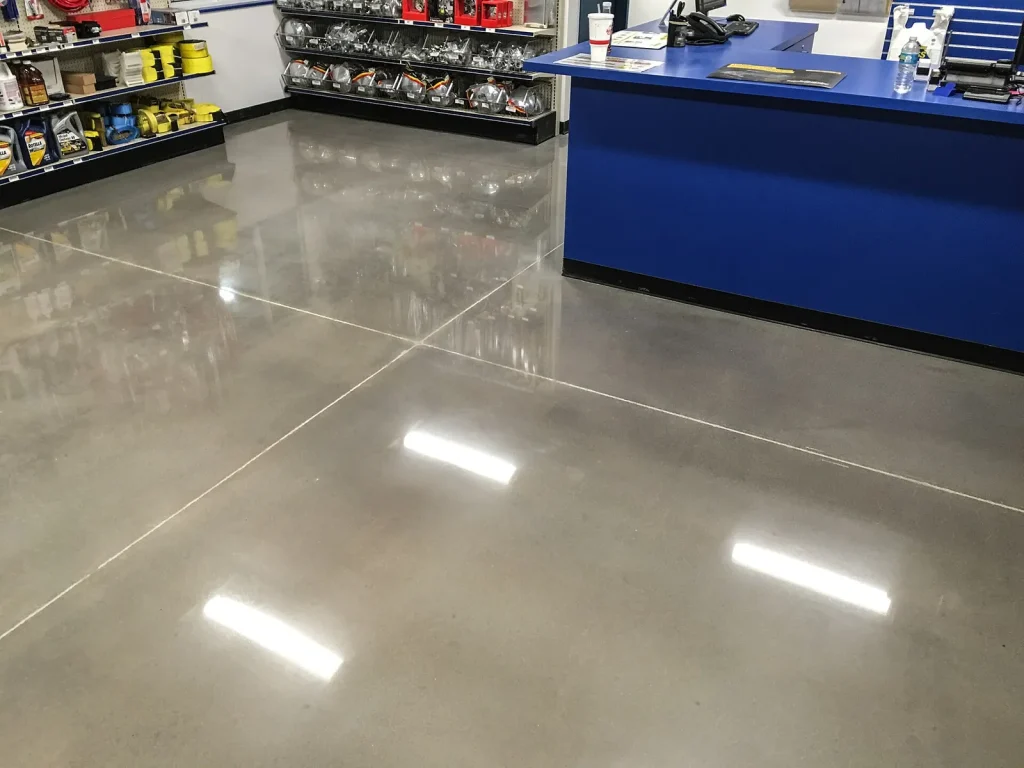
To paint a concrete floor that lasts, you have to prepare the slab more carefully than the paint: it must be clean, dry, and slightly rough so the coating can grip. Skip that work and even the best floor paint will peel. This guide covers testing, cleaning, etching, painting and how long to wait before you use the floor.
Check the Slab Before You Buy Paint
Concrete holds and passes moisture, and trapped moisture is the top reason floor coatings fail. A simple test is to tape a square of clear plastic, about two feet wide, tightly to the floor on all sides and leave it for a day or so. If you see condensation underneath or the concrete looks darker, the slab is wet and needs to be dealt with before painting.
Also look for oil stains, old sealers and cracks. Water that beads on the surface can mean a sealer is present, which usually needs to be removed. Water that soaks in slowly suggests a surface that will accept a coating.
Materials You Will Need
| Item | Purpose |
|---|---|
| Concrete degreaser and stiff brush | Remove oil and dirt |
| Concrete etcher or rental floor grinder | Roughens the surface for adhesion |
| Concrete patch or crack filler | Repairs holes and cracks |
| Concrete or masonry primer (if specified) | Improves bonding |
| Floor paint (epoxy or porch and floor paint) | The finish coat |
| Roller with extension pole, brush for edges | Application |
| Gloves, goggles, respirator | Protection |
Cover nearby walls and surfaces. Our guide to drop cloths and room protection explains how.
How to Paint a Concrete Floor Step by Step
- Empty and sweep. Clear the room and vacuum thoroughly, including dust in the corners.
- Degrease. Scrub oil spots with a degreaser, rinse well, and let the slab dry fully.
- Repair. Fill cracks and divots with a concrete patch product and let it cure as directed.
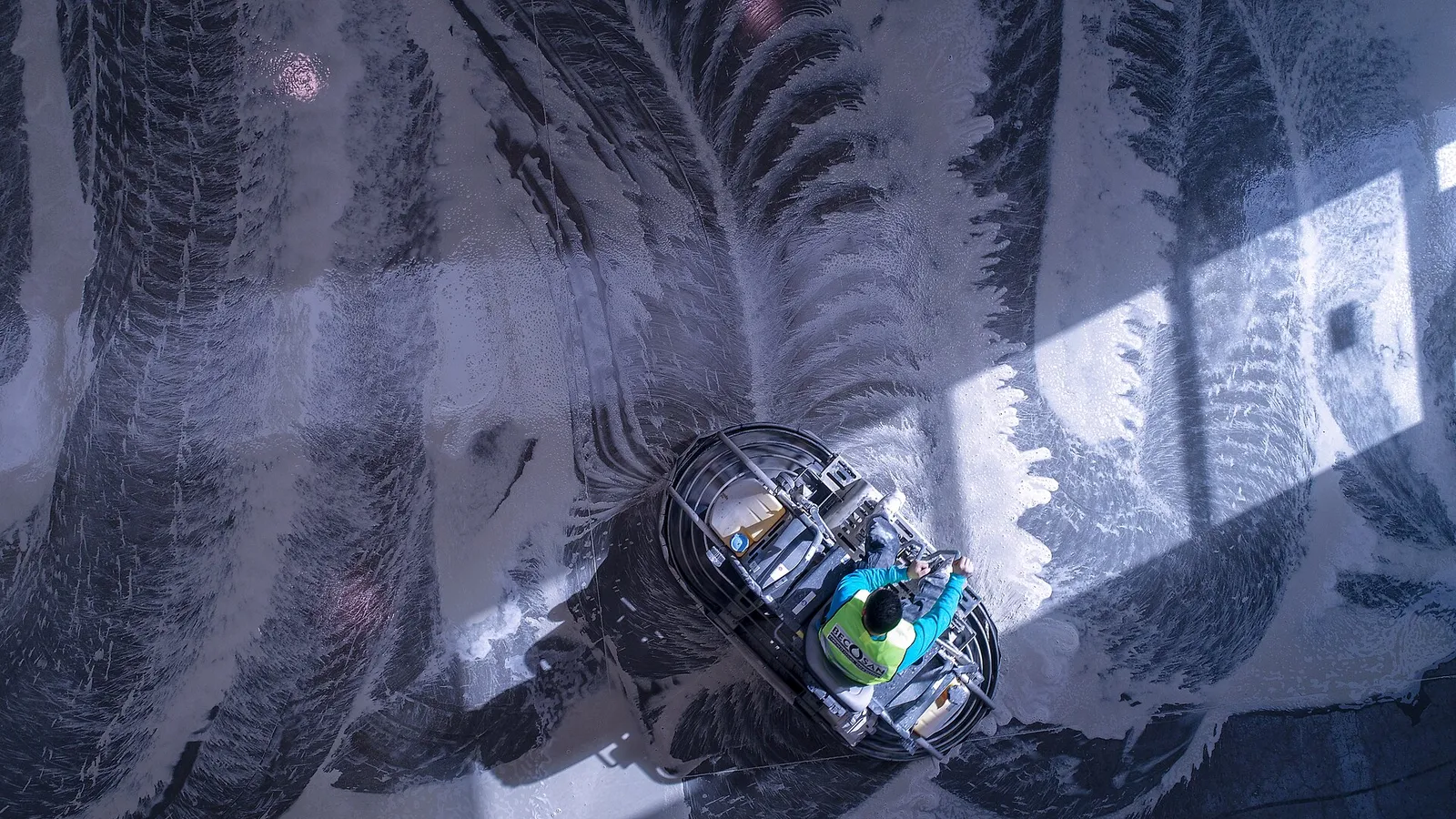
- Etch or grind. Follow the product label closely. Etching typically leaves a texture like fine sandpaper. Grinding gives a more reliable profile on smooth slabs.
- Rinse and dry. Neutralize and rinse as directed, then allow the floor to dry completely.
- Prime if the label calls for it. Some epoxy systems are self-priming; others need a primer. Check the can. For general advice see do you need primer.
- Cut in the edges. Brush the perimeter first.
- Roll the field. Work in small sections, roll thin coats, and keep a wet edge. Back out of the room toward the exit.
- Apply a second coat after the recoat window on the label.
Choosing the Right Paint
Look for products made for floors, labeled for concrete. Two-part epoxy gives a hard finish that tolerates vehicles in a garage once it is cured, but needs careful mixing and a short working time. Single-part porch and floor paint is simpler for a basement or patio. Many floor paints add anti-slip additive, which is worth considering for wet areas.
To estimate quantity, measure the floor in square feet and divide by the coverage on the can. A common label figure is about 350-400 sq ft per gallon, but floors can soak up more, so use the label for your product. Our how much paint do I need guide helps with the math.
Cure Time and Care
Dry to the touch is not the same as cured. Check the can for time before foot traffic, furniture and vehicles. Wait longer in cool or humid weather. For cleaning, use a mild soap and soft mop. Learn more about the material itself on the concrete slab page.
Safety note: floor coatings and etchers can release strong fumes and irritate skin and eyes. Ventilate well, wear gloves, goggles and a suitable respirator, and follow label directions. If the floor is covered by old paint in a home built before 1978, test it for lead before sanding or grinding and use EPA-recommended lead-safe practices if needed.
Where Painted Concrete Works Best
Painted concrete suits basements, garages, laundry rooms, porches and workshops. It is not ideal for areas with constant standing water or for slabs that stay damp. Before you paint a concrete floor outdoors, think about sun, rain and freeze-thaw cycles, and choose a coating made for exterior use.
Plan the job around the weather. Many coatings need a moderate temperature range during application and curing, listed on the can. Cold, damp or very hot slabs make the paint behave poorly and may cause bubbles or poor adhesion. If you cannot work in that range, wait.
Finally, think about color. Light greys and tans hide dust and scuffs better than pure white or black. A decorative paint chip flake broadcast over the wet coat, where the product supports it, adds texture that hides small flaws and improves traction.
Frequently Asked Questions
Can I paint a concrete floor without etching it first?
Some products skip etching, but most adhere better to a roughened surface. Follow the instructions of the specific coating, and when in doubt, prepare the surface.
How long does it last when you paint a concrete floor?
That depends on the product, traffic and moisture. Garages and basements with moisture issues wear faster than a dry interior room.
Why is my floor paint peeling?
Typical causes are moisture coming through the slab, oil residue, or skipped surface prep.
Can I paint over previously painted concrete?
Yes, you can paint a concrete floor again if the old paint is well bonded. Scrape off loose paint, scuff the surface and clean it before recoating.
Do I need a topcoat?
Some systems include a clear topcoat for extra durability. Check the manufacturer’s guidance.