In a paint sprayer vs roller matchup, the roller wins for most single rooms, while a sprayer wins on large, repetitive or hard-to-reach surfaces where speed matters more than prep time. Sprayers can cover a wall very quickly, but you pay for that speed in masking, setup and cleanup. Here is how to decide which tool fits your project.
How Each Tool Works
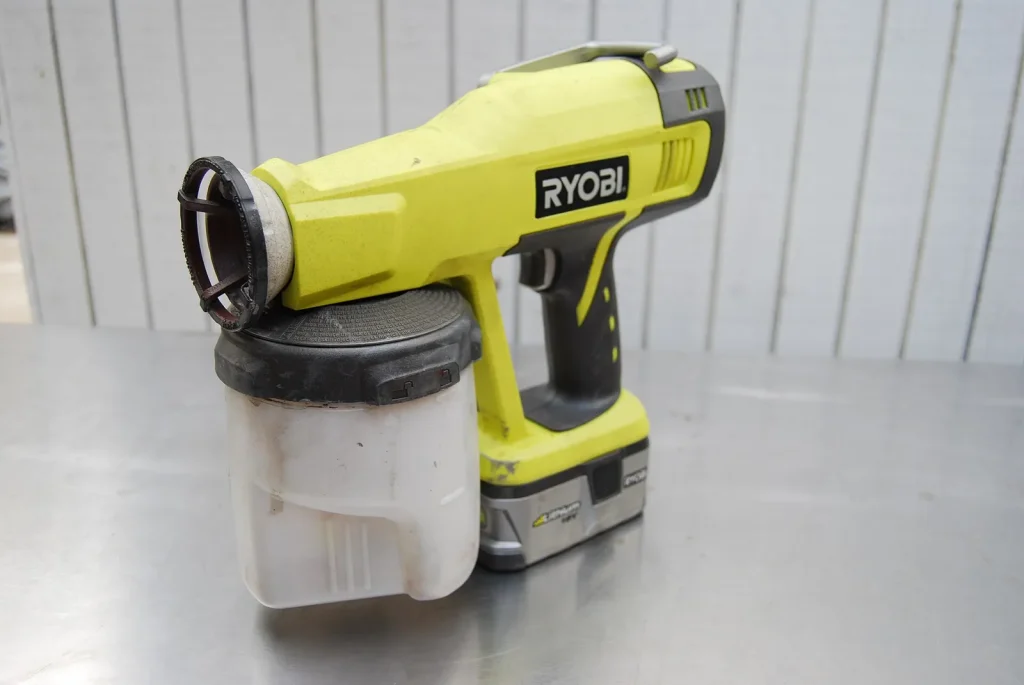
The paint sprayer vs roller question starts with mechanics. A roller transfers paint from a fuzzy cover to the wall by contact. You control the amount of paint, the pressure and the direction of each pass. A sprayer atomizes paint into a fine mist and blows it onto the surface, either with a pump that forces paint through a small tip (airless) or with air pressure (HVLP). Sprayers do not touch the wall, so they can reach grooves, spindles and rough textures that a roller would struggle with.
Paint Sprayer vs Roller: Side-by-Side
| Factor | Roller | Sprayer |
|---|---|---|
| Speed on large areas | Moderate | Very fast |
| Prep and masking | Light | Heavy, since mist travels |
| Cleanup time | Short | Longer, including flushing the pump and tip |
| Paint use | Efficient | Can waste more through overspray |
| Finish on flat walls | Good, with slight texture | Smooth and even when done well |
| Learning curve | Low | Moderate, needs practice |
| Cost | Low | Higher to buy, or rent |
When a Roller Is the Better Pick
In the paint sprayer vs roller decision for ordinary rooms, For a bedroom, a hallway or a single living room, a roller is usually quicker from start to finish once you count masking and cleanup. It also gives you good control near edges and furniture. If your room is mostly open wall, a roller with the correct cover and a brush for the edges does the job comfortably. Our paint roller nap guide helps you match the cover to your wall texture.
A roller also makes sense when you are working in an occupied home, since there is no airborne mist to settle on belongings.
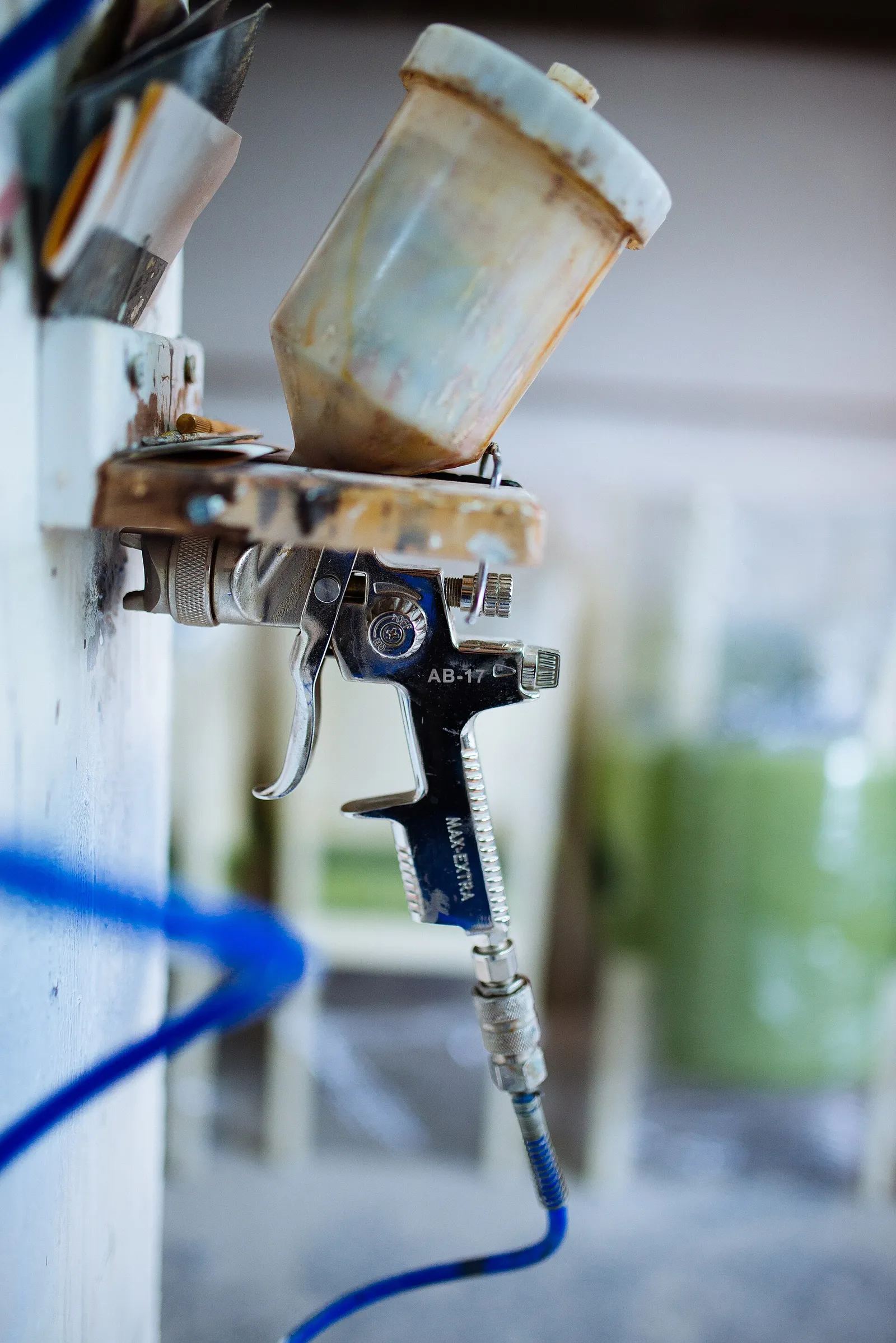
When a Sprayer Makes Sense
A sprayer earns its keep in these situations.
- Whole-house interiors or empty rooms: with furniture out and floors covered, spraying can speed up large, repeated surfaces.
- Exteriors: siding, fences and decks are easier to coat with a sprayer, especially on rough or grooved boards.
- Detailed items: shutters, louvered doors, wicker and railings have many angles a roller cannot reach.
- Cabinets and furniture: a fine-finish sprayer can leave a smooth surface with no brush marks. See our guide to painting kitchen cabinets for the prep that still matters.
What Spraying Really Requires
Prep is the catch in any paint sprayer vs roller comparison. It also decides how your day goes. A sprayer saves hours of rolling but can cost an hour or more in masking, and the cleanup is more involved than rinsing a roller in a sink. Budget for that, plus a few minutes of test spraying on cardboard, before you count the time saved. Mist drifts, so you need to mask or remove anything you do not want painted. Good drop cloths and room protection are not optional. Paint may also need thinning for some sprayers, so read the sprayer manual and paint label.
- Clear and mask. Remove furniture, cover floors, tape edges, and cover windows, outlets and fixtures.
- Test the spray. Practice on cardboard to set pressure and distance, usually about a foot from the surface.
- Move evenly. Start moving before you press the trigger, keep the gun parallel to the wall and overlap each pass by roughly half.
- Back-roll if the paint can instructions suggest it. Some professionals roll over fresh sprayed paint to even it out and push it into the surface.
- Clean right away. Flush the sprayer following the manufacturer’s instructions before paint dries inside it.
Cost is the other part of the paint sprayer vs roller question. Rollers and covers are inexpensive, while a decent sprayer is a bigger purchase, though rental is an option for a one-time job. Many painters combine the two tools: spray for speed, then back-roll for finish. For the roller-based process from start to finish, see the broader overview on the paint sprayer Wikipedia page.
Safety Note
Spraying creates fine airborne particles, so wear a respirator rated for paint mist or vapors as the paint label directs, plus eye protection, and ventilate the space well. Keep spray equipment away from open flames or pilot lights when using solvent-based coatings. If the home was built before 1978, the existing paint may contain lead. Test it with an EPA-recognized kit and do not sand or spray over damaged paint without lead-safe practices.
Frequently Asked Questions
Is a sprayer faster than a roller in a paint sprayer vs roller test?
On large open surfaces, yes. Once you add masking and cleanup, a roller can finish a small room sooner.
Does a sprayer use more paint?
It can, since some of the mist misses the surface. Paint use depends on the type of sprayer and your technique.
Can I use any paint in a sprayer?
Not always. Some paints need thinning, and some sprayers cannot handle thick coatings. Check both the paint label and the sprayer manual.
Which gives a smoother finish?
A sprayer can give a smoother, more uniform film, especially on cabinets and trim. A roller leaves slight texture that is perfectly fine on most walls.
Is a sprayer good for beginners?
It can be with practice runs on scrap material first, but a roller is more forgiving for a first project.