Knowing how to paint a ceiling comes down to three habits: use flat paint, work in small sections with a wet edge, and roll in one direction with a light touch. Ceilings are unforgiving because overhead light exposes every streak and lap mark, but a good setup and steady pace give you a clean, even finish. Here is the whole process, from setup to final coat.
Gather the Right Gear
| Item | Why it matters |
|---|---|
| Flat or matte ceiling paint | Hides flaws and reduces glare |
| 3/8 to 3/4 inch nap roller cover | Match the nap to the texture; see our paint roller nap guide |
| Extension pole | Lets you reach without a ladder for most of the work |
| Angled brush (2 to 2.5 inch) | For the edges and corners |
| Drop cloths and painter’s tape | Protect floors, walls and fixtures |
| Safety glasses, hat | Drips come straight down |
Prep Before You Paint a Ceiling
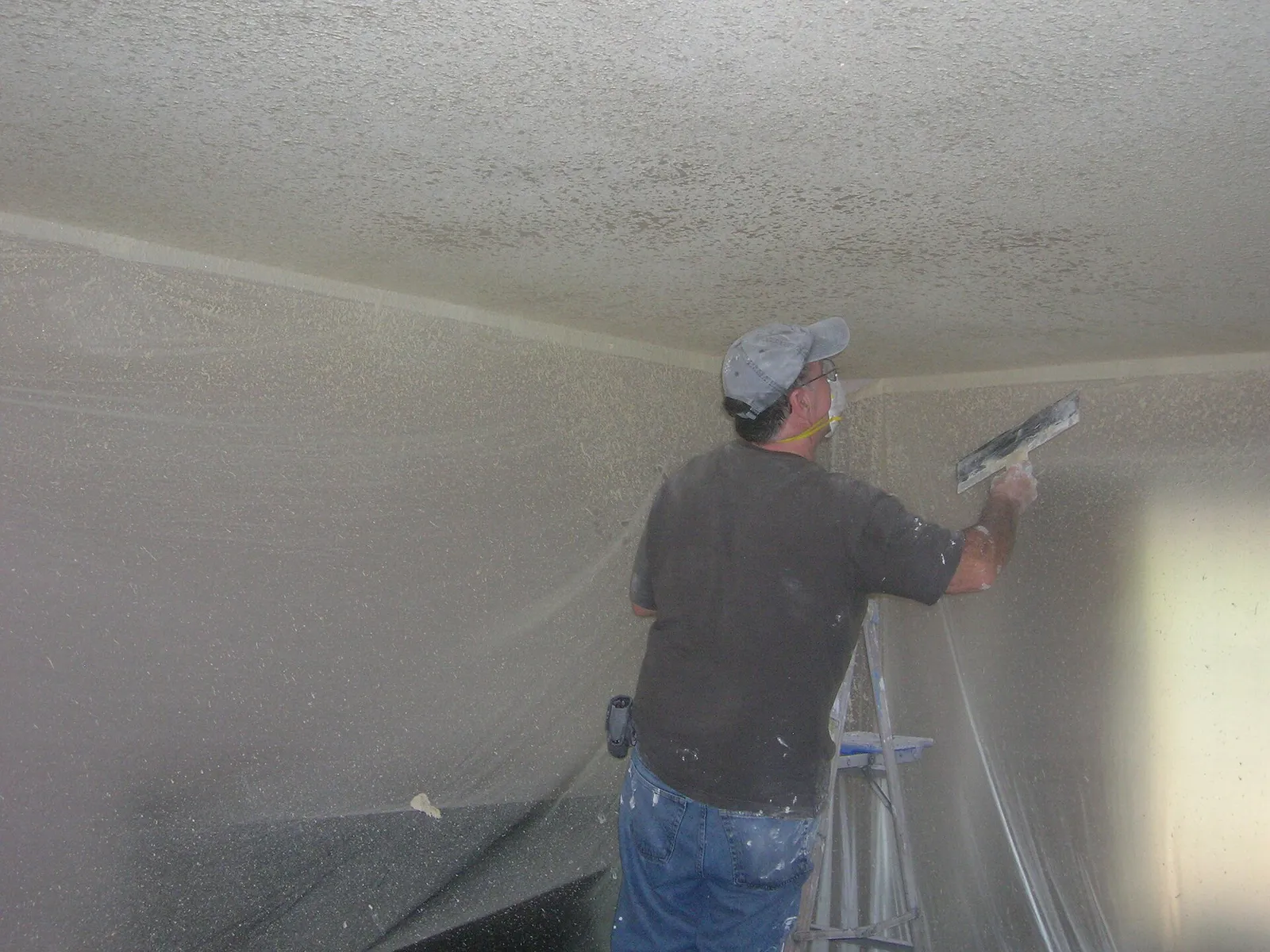
Clear the room or push furniture to the center under plastic. Cover the floor, since overhead rolling spatters. Turn off the power at the breaker if you will remove light fixtures, or loosen and cover them. Wipe away cobwebs and dust, and wash greasy areas such as kitchen ceilings. Patch cracks and holes, sand smooth, and spot-prime. Water stains need a stain-blocking primer first, and the leak should be fixed before any paint goes on. For a wider refresher, see how to prep walls before painting, as the same steps apply overhead.
How to Paint a Ceiling Step by Step
- Cut in the perimeter. Brush a 2 to 3 inch band where the ceiling meets the walls. Work in sections so the band stays wet.
- Load the roller lightly. Roll off extra paint on the tray. A heavy roller drips and spatters.
- Start at the window side. Roll across the shorter dimension in strips about three feet wide. Working away from the light lets you see missed spots.
- Use a W pattern first. Spread the paint, then fill the shape with light parallel strokes.
- Keep a wet edge. Overlap each new strip into the previous one before it dries.
- Finish with one direction. Do a last light pass in a single direction toward the window for a consistent look.
- Let it dry, then recoat. Check the can for timing, and apply a second coat if needed.
A word on timing: plan the job so you can finish each coat in one go. Stopping halfway across a ceiling is the biggest reason beginners struggle with how to paint a ceiling evenly, because the dried edge shows. Block out an afternoon, silence your phone, and keep going until the coat is complete.
Prevent Drips, Streaks and Lap Marks
Drips and Spatter
The usual cause is too much paint on the roller or fast rolling. Slow down and use a low-spatter ceiling paint if you can. A roller cover with a shorter nap carries less paint, which helps. Wipe spatter on the wall right away.
Streaks and Lap Marks
Lap marks show up when you roll over paint that has begun to dry. Paint in the cut-in band and roll right away, and work the entire ceiling without long breaks. Open windows increase drying speed, so on a warm day you may need to move faster.
Flashing and Patchiness
Dull spots appear over patches that were not primed. Spot-prime repairs and stains before painting. If the ceiling has a texture, use a thicker nap to push paint into the grooves.
Cleanup and Finishing
Anyone learning how to paint a ceiling should also plan the cleanup, since overhead work leaves paint on tools, floors and hands.
Peel tape while the paint is not fully hard, or score it with a utility knife. Wash tools with warm soapy water for latex paint. Once all is dry, check the ceiling with a lamp held at an angle, and touch up spots with a small brush. A final tip: if you plan to paint the walls too, do the ceiling first, as outlined in our guide on how to paint a room. People searching how to paint a ceiling often forget this order, and spend extra time fixing spatter. For background on the surface itself, see the Wikipedia article on ceilings.
Once you know how to paint a ceiling in sections, it gets faster each time. Take breaks to rest your neck, and keep a stable step ladder close by for the corners.
Safety Note
Use a sturdy ladder on level ground and never overreach; move it instead. Ventilate the room well, and wear glasses to protect your eyes from drips. If your home was built before 1978, the existing paint may contain lead. Use a lead test kit before sanding or scraping, and follow EPA-recommended lead-safe work practices if it tests positive, because ceiling dust falls on you and the room.
Frequently Asked Questions
Should I paint the ceiling or the walls first?
Ceiling first. Drips and spatter will land on the walls, which you will paint afterward anyway.
What kind of paint is best for ceilings?
Flat or matte paint formulated for ceilings is the usual choice. It hides small flaws and does not reflect glare from lights.
How many coats does a ceiling need?
Often two, especially when covering a stain or changing color. A single coat can work for a fresh repaint in the same shade, but check in daylight.
How do I avoid a sore neck while painting a ceiling?
Use an extension pole, take frequent breaks, and keep the work light on. A pole keeps you looking forward rather than straight up.
Can I paint a textured ceiling with a roller?
Yes. Use a thicker nap, such as 3/4 inch, and press gently so paint reaches the valleys of the texture without flaking it.